

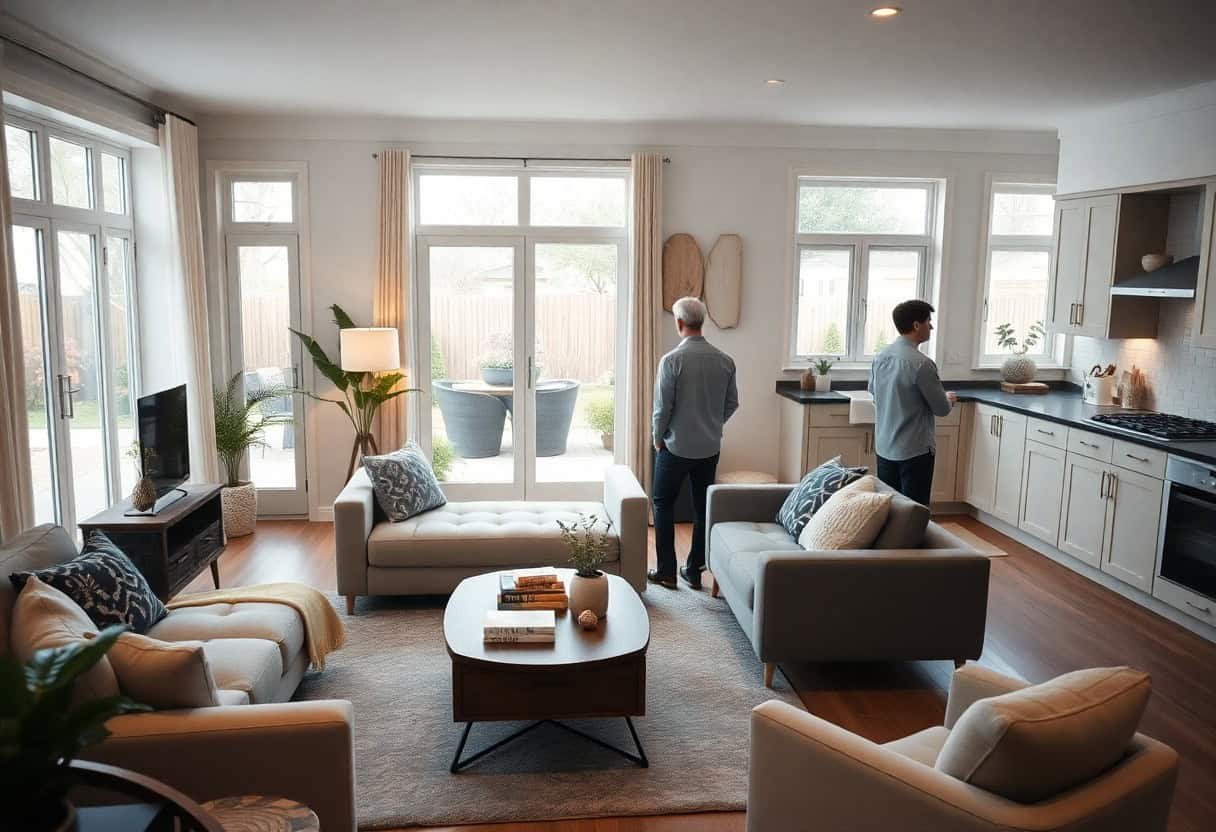
Buying a home is one of the most significant financial decisions a person will ever make. Yet, despite the numbers, mortgage rates, and market comparisons involved, many buyers will confess that their final choice came down to a feeling. The psychology of home buying reveals a fascinating truth i.e. we are not nearly as rational as we think we are. Emotions, memories, and deeply ingrained desires quietly steer our decisions, often before we’ve gone through the facts, statistics, and other external long – term factors.
The Real Estate Psychology Behind Falling in Love with a Home
Understanding why people fall in love with houses requires us to look beyond the property itself. A house is not merely a shelter, it is a canvas for identity, aspiration, and belonging. Real estate psychology confirms that the emotional brain activates the moment we experience a space that resonates with us.
- A home represents personal identity, buyers picture who they want to become in that space.
- Emotional home buying decisions are driven by the limbic system, which processes memory and emotion.
- Two buyers can view the same property and have entirely different emotional responses based on personal triggers.
- Home buying behavior is shaped far more by feelings than most buyers are willing to admit.
The Power of First Impressions and Curb Appeal
Curb appeal psychology is one of the most studied aspects of real estate. Research consistently shows that buyers form a strong first impression within seconds of arriving at a property, and that impression is rarely reversed. Which means if your customer likes a property during his/her first visit, they would try at their utmost capability to come up with a way to make the ends meet. The emotional connection to a home sometimes outdo the financial and other external constraints.
- The color of a front door, garden neatness, and outdoor lighting all trigger immediate emotional reactions.
- Curb appeal psychology shows that a welcoming exterior primes buyers to view the interior more favorably.
- A neglected outside can taint the entire viewing experience, even if the interior is immaculate.
- Sellers who invest in street presence understand that first impressions are the foundation of emotional home buying decisions.
- Buyers often decide within 30 seconds of arrival whether they are emotionally interested in a property.
Cognitive Biases That Distort Our Judgement
Cognitive biases in home buying are among the most powerful forces shaping real estate decisions. These mental shortcuts feel like logical reasoning but are actually emotional patterns in disguise. Here is how it works:
- The first price seen becomes the mental benchmark for every property viewed afterward.
- Once a buyer falls in love, they unconsciously filter out negative information about the property.
- Phrases like ‘multiple offers expected’ trigger urgency and push buyers toward emotional home buying decisions.
- One outstanding feature such as a stunning kitchen or a lush garden, causes buyers to overlook significant flaws and inconveniences.
- Cognitive biases in home buying can lead to overbidding, skipping surveys, and ignoring red flags that would otherwise seem obvious.
Dream Home Psychology
Dream home psychology explains why so many buyers enter the market with a precise mental image of their ideal property, and why that image holds enormous emotional power over their decisions. This is a core reason why people fall in love with houses that are not necessarily the most sensible financial choice because:
- Dream home psychology is shaped by childhood experiences, lifestyle aspirations, social media, and personal milestones.
- Buyers influenced by dream home psychology may stretch budgets or dismiss practical concerns to secure the ‘perfect’ home.
- Interestingly, the dream home is not fixed, rather the home buying behavior shows that buyers frequently revise their wish lists mid-search when emotion intervenes.
The psychology of purchasing a home acts as a crucial reminder that people are emotional beings who make significant financial decisions. That is just human nature; it is not weakness in itself. Your emotions are telling you something important, whether it’s dream home psychology igniting your imagination, cognitive biases in home purchasing influencing your sense of value, or curb appeal psychology luring you in at the gate.
Instead of removing emotion from the process, the objective is to comprehend it sufficiently to keep it from taking center stage. Understanding your unique purchasing habits as a real estte buyer will help you make smarter choices, feel less nervous, and ultimately find homes that will fulfill your life in the long run.
