

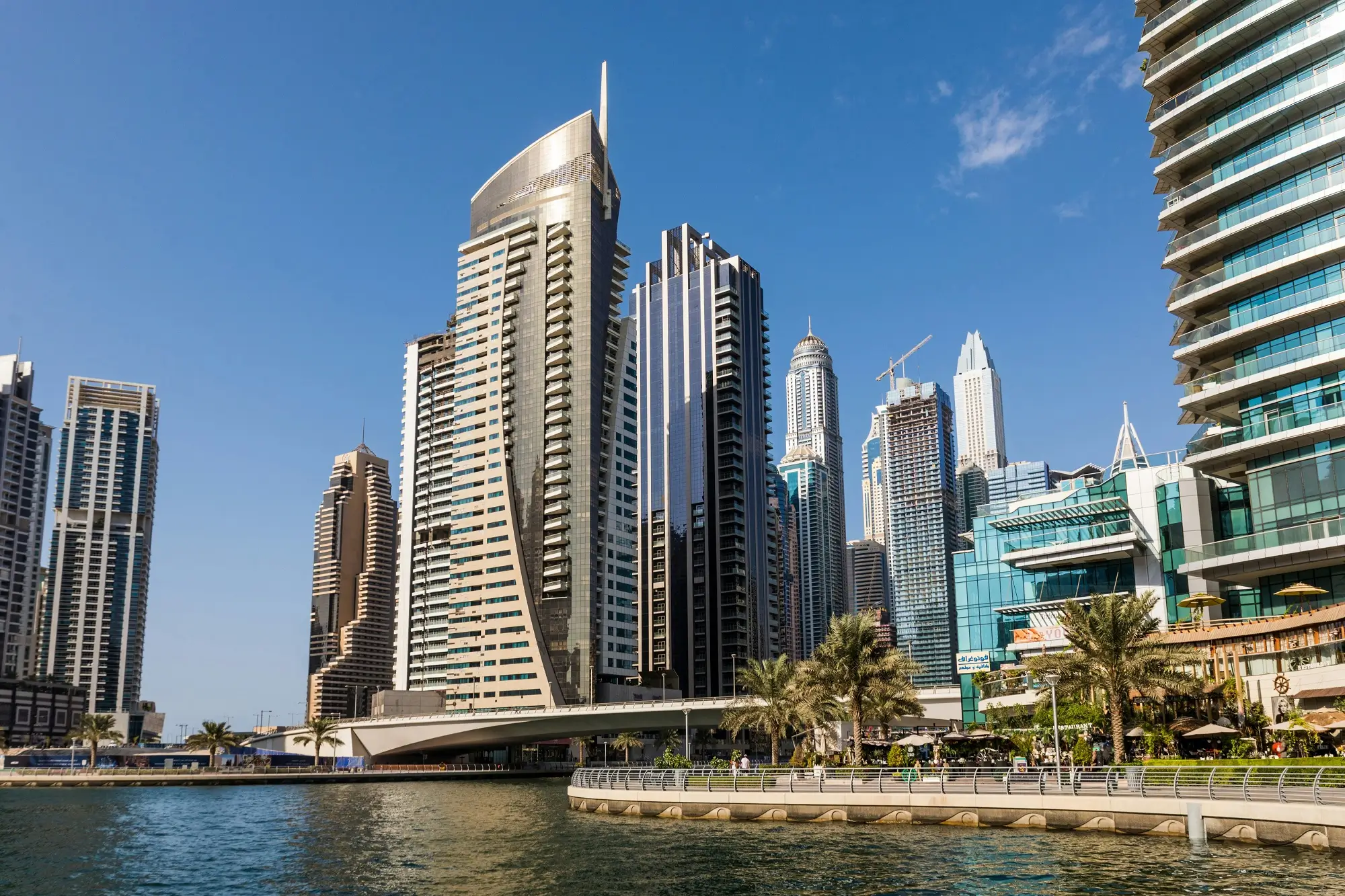
Every year, somewhere in the world, a financial commentator publishes a warning about the imminent Dubai property market crash. Prices have risen too fast. Supply is overwhelming demand. Geopolitical tensions are about to derail everything. The bubble, we are told, is finally about to burst.
And every year, Dubai’s property market does something remarkably consistent in response.It keeps growing.
Residential property transactions in Dubai rose by more than 18% in 2025, with over 205,000 buyers entering the market. Total transaction value surged by 25%, driven in part by increasing demand for high-end and luxury properties, with the average property sale now exceeding US$700,000.
This is not the profile of a market on the edge of collapse. This is the profile of a market that has genuinely earned its resilience. But why? What is it about Dubai real estate resilience that has consistently confounded the pessimists? And what does the current picture in Dubai property market 2026 tell us about where things go from here?
The Crash Predictions
To understand Dubai real estate resilience, it helps to appreciate just how many times the market has been written off, and how consistently those predictions have failed.
After the genuine crash of 2008 to 2009, which was real, severe, and rooted in speculative excess and reckless leverage, pessimism became the default lens through which many analysts viewed Dubai property. Every subsequent period of rapid growth was interpreted as a new bubble inflating toward an inevitable repeat.
The post-pandemic recovery of 2021 drew warnings. The 2022 surge drew more. The record-breaking 2023 and 2024 numbers prompted near-universal predictions of an imminent correction. And when regional geopolitical tensions emerged in early 2026, the crash narrative returned with fresh urgency.
Transaction volumes and prices had surged entering 2026, with January alone seeing an 86.5% year-on-year jump in deals and residential prices up around 60% since 2022. Yet the structural break that so many predicted has not materialised. Understanding why requires looking honestly at what actually drives Dubai property market 2026 performance, and why those drivers are fundamentally different from the conditions that produced the 2008 collapse.
1- The 2008 Crash Was a Different Case
The first and most important point in any honest Dubai housing market outlook analysis is this: the conditions that produced the 2008 crash no longer exist.
The 2008 collapse was driven by three forces that have since been comprehensively addressed. Speculative buyers purchasing multiple off-plan units with minimal deposits and no intention of completing. Extreme leverage, with mortgages available at loan-to-value ratios that amplified losses catastrophically. And almost no regulatory framework governing developers, escrow accounts, or buyer protections.
Unlike 2008, the current Dubai real estate market is more mature and heavily regulated. Dubai continues to record high property transaction numbers reflecting sustained demand, and the market is regulated, mortgage rules are strict, and many transactions are cash-based, reducing systemic risk compared to 2008.
Today’s Dubai property market 2026 operates in an entirely different regulatory environment. UAE Central Bank loan-to-value rules cap residential mortgages at 80% for first-time buyers and 60% for investors. RERA and the Dubai Land Department enforce escrow requirements that protect buyers. Developers must demonstrate financial capacity before launching projects. The architecture of the market has been deliberately rebuilt to prevent speculative excess from creating systemic fragility.
2- Cash Buyers Eliminate Systemic Risk
One of the most structurally distinctive features of Dubai real estate resilience is the extraordinary proportion of cash transactions in the market.
More than four out of five residential property purchases in Dubai are made without financing. This significantly reduces systemic risk because excessive leverage is what typically destabilizes property markets, and that risk is much lower here.
This single fact fundamentally changes the Dubai property investment stability equation. Property market crashes are almost universally triggered or amplified by forced selling, owners who cannot meet mortgage obligations and must liquidate at any price, creating a cascade of falling values that feeds on itself.
When the overwhelming majority of Dubai property owners hold their assets free of debt, that cascade mechanism simply does not exist. Owners who entered during the post-pandemic run-up are sitting on substantial gains and have no financial pressure to exit, even during periods of sentiment weakness. The result is a market where, even when transaction volumes slow, prices do not collapse because distressed selling is structurally absent.
3- Genuine End-User Demand Has Replaced Speculation
Perhaps the most important structural change in Dubai property market 2026 is the nature of who is buying and why.Today’s buyers are not speculative flippers looking to exit quickly. They are primarily end-users or long-term investors who are focused on value, lifestyle, and sustainable returns.
This matters enormously for Dubai real estate fundamentals.Genuine end-user demand, or people purchasing houses to live in, raise families, and establish long-term roots, drives a market that is intrinsically more stable than one that is driven by speculative short-term bets. During times of geopolitical instability, end users do not panic-sell. When sentiment softens, they don’t immediately flood the market with inventory. They remain, take care of their homes, and contribute to the neighborhood’s quality, which keeps and increases values over time.
The UAE Golden Visa programme has been central to this transformation, anchoring long-term commitment to the city in a way that nothing previously had. Buyers who once hedged their Dubai commitment with short lease cycles are now purchasing family homes with 10-year residency security. That psychological and legal shift is one of the most important and underappreciated drivers of Dubai property investment stability in the current market.
4- Population Growth Is Structural, Not Cyclical
Every honest Dubai housing market outlook must grapple with the supply question. Dubai is building a lot of property. Can demand keep pace?
The answer lies in understanding the nature of Dubai’s population growth, which is not a cyclical boom-bust phenomenon but a structural, policy-driven expansion that shows no signs of reversing.
Beyond tourism, Dubai’s resident population is growing steadily, driven by business migration, Golden Visa take-up, and the emirate’s deliberate positioning as a global talent and wealth hub. Observers attribute Dubai’s transaction surge to its investor-friendly environment and a booming population, particularly of high-net-worth individuals.
A growing population creates housing demand. That demand absorbs new supply. And why invest in Dubai property remains a question with an increasingly compelling answer: because the city is simply getting bigger, wealthier, and more globally connected every year.
5- The Geopolitical Stress Test of 2026
The most recent and perhaps the most severe test of Dubai real estate resilience came in early 2026, when regional geopolitical tensions created genuine near-term uncertainty across the market.
Dubai’s real estate market showed robust performance during Ramadan 2026, recording 15,196 transactions with a combined value of AED 50.58 billion — a 5.63% year-on-year increase in volume and a 29.7% year-on-year increase in value, despite regional conflict involving Iran, the US, and Israel.
The performance of the market through this period is perhaps the most powerful evidence yet of genuine Dubai real estate resilience. Transaction volumes did slow in March as buyers adopted a wait-and-see approach which is a justified rational behaviour given the uncertainty. But the structural break that pessimists anticipated did not arrive.
According to ValuStrat’s Q1 2026 Dubai Real Estate Review, residential capital values remained up 8.9% year-on-year, even as the ValuStrat Price Index recorded its first quarterly decline since the pandemic, falling 3.8%. Average villa prices reached AED 13.6 million, while apartments averaged AED 1.85 million, highlighting that values remain elevated despite short-term adjustments.
A 3.8% quarterly dip after years of extraordinary growth is not a crash. It is exactly what a mature, well-regulated market looks like when it absorbs an external shock. The Dubai property market 2026 passed its most severe stress test with its fundamental value proposition intact.
Danube Group founder Rizwan Sajan noted that Dubai has spent decades building its reputation as a safe, stable, and resilient global city, and the current regional conflict, while unfortunate, does not undermine those foundations.
6- The Safe Haven Effect
One of the most counterintuitive aspects of Dubai real estate fundamentals is that geopolitical instability elsewhere in the world tends to drive capital toward Dubai rather than away from it.
Dubai is a sanctuary market due to its dollar-pegged currency, strong legal framework, tax efficiency, and residency-by-investment pathways. Every time there has been a crisis, whether economic or geopolitical, Dubai has emerged stronger.
This safe haven dynamic is not a marketing claim. It is a pattern that has repeated itself across multiple global crises, from the 2008 financial crash to the pandemic to the current regional tensions. Wealthy individuals and institutional investors facing uncertainty in their home markets consistently look to Dubai as a destination for capital preservation i.e. tax-free, legally transparent, politically stable, and offering genuine lifestyle quality alongside financial security.
The why invest in Dubai property question is answered differently during periods of global stress. For international buyers from Europe, Asia, and beyond, Dubai’s appeal during uncertain times is not diminished. It is amplified.
What the Market Actually Looks Like Right Now
Honest Dubai housing market outlook analysis in mid-2026 requires acknowledging nuance. The market is not in the same position it was in early 2025, and pretending otherwise would not serve buyers or investors well.
Rather than citywide patterns, price performance in 2026 is probably going to differ by community, property type, and supply dynamics. Long-term price stability is typically supported by supply restrictions in established neighborhoods with little space for growth.
In some overcrowded areas, the apartment market is under more pressure than the villa and luxury segments, which are nonetheless doing well. In terms of transaction volume, off-plan still performs better than secondary. Additionally, the geopolitical situation has caused a minor widening of the gap between selling positions and buyer pricing expectations, which has resulted in more bargaining and slower conversions rather than widespread price drops.
This is not the picture of a market in crisis. It is the picture of a market maturing, one where blanket market-wide predictions are giving way to a more nuanced, community and asset-specific analysis. For informed buyers working with experienced advisors, that environment creates genuine opportunity.
What History Tells Us About the Right Time to Buy
For long-term investors, 2026 may present opportunities, especially if the market cools slightly. Buying during stabilisation periods often allows better entry pricing. A crash similar to 2008 is unlikely under current conditions.
The buyers who have generated the strongest long-term returns from Dubai property investment stability are not those who tried to time the perfect market peak or trough. They are those who identified strong fundamentals, chose quality assets in proven communities, and held through the inevitable short-term noise. 2026 is shaping up to reward strategic, informed decision-makers, those who plan for long-term returns and community-focused locations rather than over-heated speculation.
The pattern of Dubai real estate resilience over the past fifteen years is clear. Every period of predicted collapse has, in retrospect, been a buying opportunity. Every pause has been followed by renewed growth. Every stress test has been absorbed by a market with fundamentals strong enough to withstand it.
At RGP Properties, our position on the Dubai property market 2026 is grounded in data, not sentiment. The fundamentals that have driven Dubai real estate resilience across multiple cycles i.e. population growth, cash-heavy transaction profile, end-user demand, regulatory maturity, safe haven capital flows, and Golden Visa anchored commitment, remain firmly intact.
The Dubai property market crash that so many have predicted is not coming, for the same structural reasons it did not come in 2022, 2023, 2024, or 2025. What is happening instead is exactly what a healthy, maturing market should do: absorb shocks, segment by asset quality, reward long-term holders, and create selective opportunities for informed buyers during periods of sentiment-driven caution.
📞 Contact RGP Properties today and let our team help you navigate the current market with clarity, confidence, and access to the finest opportunities across Dubai’s most resilient communities.
