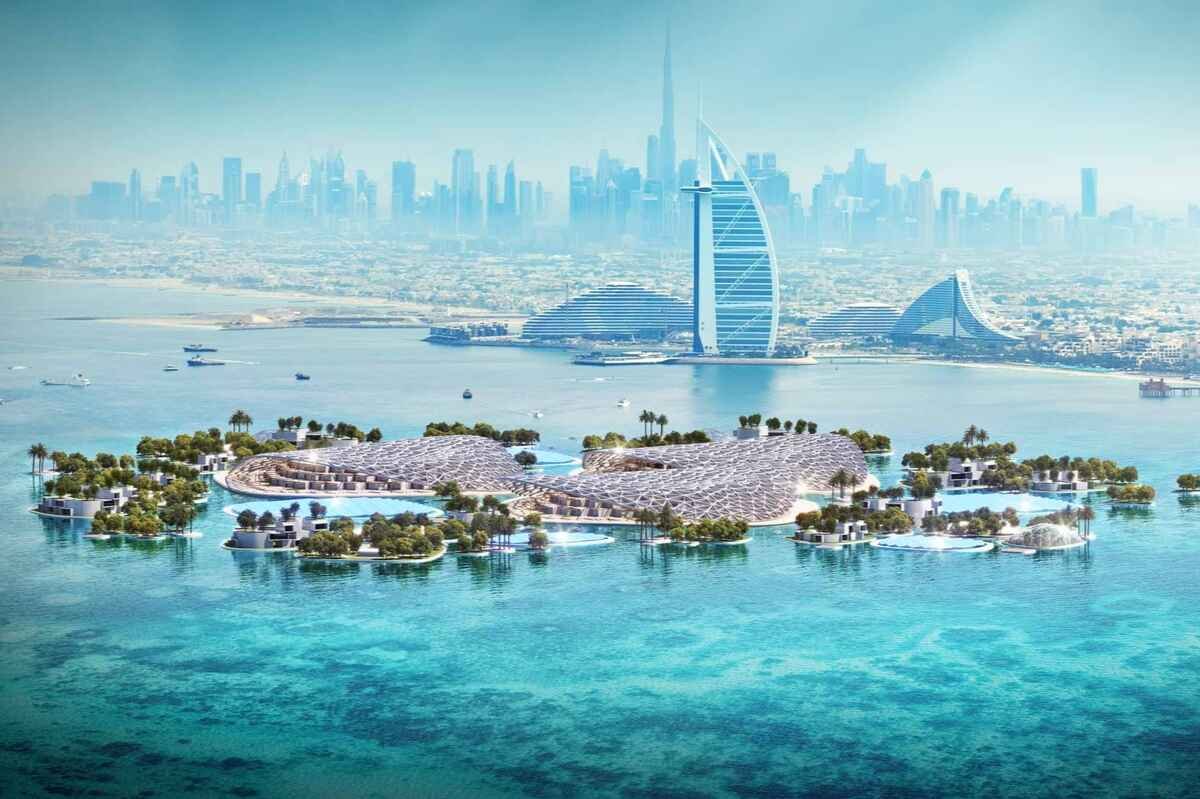
Dubai continues to redefine its skyline and global reputation with visionary projects that extend far beyond architecture; these are economic catalysts designed to shape the city’s next era of progress. From aviation to logistics, waterfront living to smart cities, these five strategic mega projects are setting new standards in urban development, sustainability, and investment opportunity.
Dubai South: Dubai’s Emerging Economic Capital
Located in the southern region of the emirate, Dubai South is designed as a city within a city, a vast, mixed-use district combining logistics, aviation, free zones, and residential communities. It is positioned around the Al Maktoum International Airport (DWC) and Expo City Dubai, creating an interconnected ecosystem for business and trade.
This 145-square-kilometer master development serves as the foundation for Dubai’s ambition to become a global logistics capital. It connects the Jebel Ali Port, DWC, and major highways, allowing seamless movement of goods, services, and people. The region is also home to the Dubai South Free Zone, attracting local and international enterprises seeking flexible regulations, modern infrastructure, and proximity to global transport links.
For investors, Dubai South offers early-stage opportunities in residential, commercial, and industrial real estate. As infrastructure matures and demand for logistics and business space grows, properties in this area are expected to appreciate significantly. The focus on aviation-linked trade and the government’s incentives make it one of Dubai’s most strategic emerging locations for investment.
Expo City Dubai: Shaping the Future
Following the global success of Expo 2020, Expo City Dubai has evolved into a permanent smart city, a hub for innovation, sustainability, and global collaboration. Built on the principles of green design and walkability, it is envisioned as Dubai’s first 15-minute city, where residents can live, work, and access amenities within a short distance.
Expo City spans roughly 4.38 square kilometres and includes dedicated zones for business headquarters, research centres, innovation labs, residences, and cultural attractions. It is home to the Green Innovation District, a first-of-its-kind initiative in the UAE focused on sustainability and clean technology ventures.
This development is more than a city, it’s a blueprint for future urban living. From energy-efficient buildings to extensive pedestrian paths and green spaces, Expo City demonstrates Dubai’s commitment to creating an environmentally responsible and digitally connected lifestyle.
From an investment perspective, residential properties here appeal to professionals, innovators, and global citizens who value sustainability and community living. The area’s positioning near Dubai South and the new airport enhances accessibility, further boosting long-term investment potential.
Al Maktoum International Airport (DWC): The Upcoming Global Aviation Hub
The Al Maktoum International Airport, located within Dubai South, is set to become one of the largest airports in the world, designed to accommodate up to 260 million passengers annually once fully complete. With an estimated expansion cost of AED 128 billion, this mega project underscores Dubai’s continued dominance in global aviation.
The airport is central to the emirate’s logistics and transport infrastructure, linking air cargo, passenger services, and trade seamlessly with the Jebel Ali Port and Dubai South Free Zone. The massive expansion will introduce new passenger terminals, advanced cargo facilities, and world-class amenities to support Dubai’s growing tourism and business sectors.
For real estate investors, the areas surrounding DWC are expected to experience sustained demand from aviation-linked industries, logistics companies, and residential developers catering to professionals working in the area. While large-scale completion may take years, early investments in nearby zones offer strong long-term potential as the development matures into Dubai’s new air travel epicenter.
Jebel Ali Port: The Global Trade and Logistics Powerhouse
Jebel Ali Port remains the heartbeat of Dubai’s trade and logistics ecosystem. Recognized as one of the world’s largest man-made harbors, it is a critical node in global shipping routes and a cornerstone of the UAE’s economic success. Together with the Jebel Ali Free Zone (JAFZA), it hosts thousands of international companies and contributes significantly to Dubai’s GDP.
The port’s strategic proximity to the Al Maktoum International Airport and Dubai South forms a tri-zonal logistics hub unmatched in connectivity and efficiency. It serves as the main gateway for trade across the Middle East, Africa, and Asia, a position further strengthened by ongoing infrastructure upgrades and technological innovation in port management.
From an investment standpoint, Jebel Ali’s industrial zones, warehousing facilities, and logistics parks present attractive opportunities for long-term commercial growth. The steady expansion of global trade routes and Dubai’s pro-business environment continue to make this area a magnet for investors seeking industrial and logistics-related assets.
Palm Jebel Ali: The Next Generation of Waterfront Living
Revived as one of Dubai’s most ambitious residential projects, Palm Jebel Ali is set to surpass its iconic sibling, Palm Jumeirah, in both size and scale. Spanning around 13.4 square kilometers and featuring over 110 kilometers of coastline, this master development redefines waterfront living with a blend of luxury homes, private beaches, resorts, and hospitality experiences.
Planned for around 35,000 families and 80+ hotels, Palm Jebel Ali represents the new wave of Dubai’s coastal expansion. It’s strategically located between the Jebel Ali Port and Dubai South, ensuring easy access to both business and lifestyle hubs. The development is designed to balance exclusivity with connectivity, a community where residents can enjoy resort-style living without being far from the city’s economic centers.
The first residential launches have already seen strong demand from investors and end-users, signaling high market confidence. As with most large-scale developments, the project will unfold in phases, with the initial handovers expected around 2027–2028. Investors are drawn not only by its location and exclusivity but also by Dubai’s proven ability to deliver high-value waterfront destinations.
Dubai’s Strategic Growth Vision
Each of these projects is a cornerstone of Dubai’s future growth strategy, a strategy rooted in diversification, innovation, and connectivity. Together, Dubai South, Expo City, Al Maktoum Airport, Jebel Ali Port, and Palm Jebel Ali form a powerful ecosystem that strengthens the emirate’s position as a global business, tourism, and lifestyle hub.
These developments are not isolated; they’re interconnected parts of a master vision where logistics, aviation, and urban living converge. The result is a self-sustaining growth corridor stretching from the coast to the desert, built for commerce, community, and opportunity.
For investors, this alignment offers multiple entry points depending on risk appetite and investment goals. Early-stage opportunities in Dubai South or Expo City may offer higher returns over time, while mature infrastructure zones like Jebel Ali provide stability and consistent yields. Waterfront luxury projects such as Palm Jebel Ali cater to the premium segment, appealing to both international investors and end-users seeking exclusivity.
With the government’s focus on sustainable development, innovation-driven policy, and a tax-friendly environment, Dubai’s mega projects stand as testaments to its vision of progress, a city that continuously reinvents itself while maintaining global competitiveness.
