
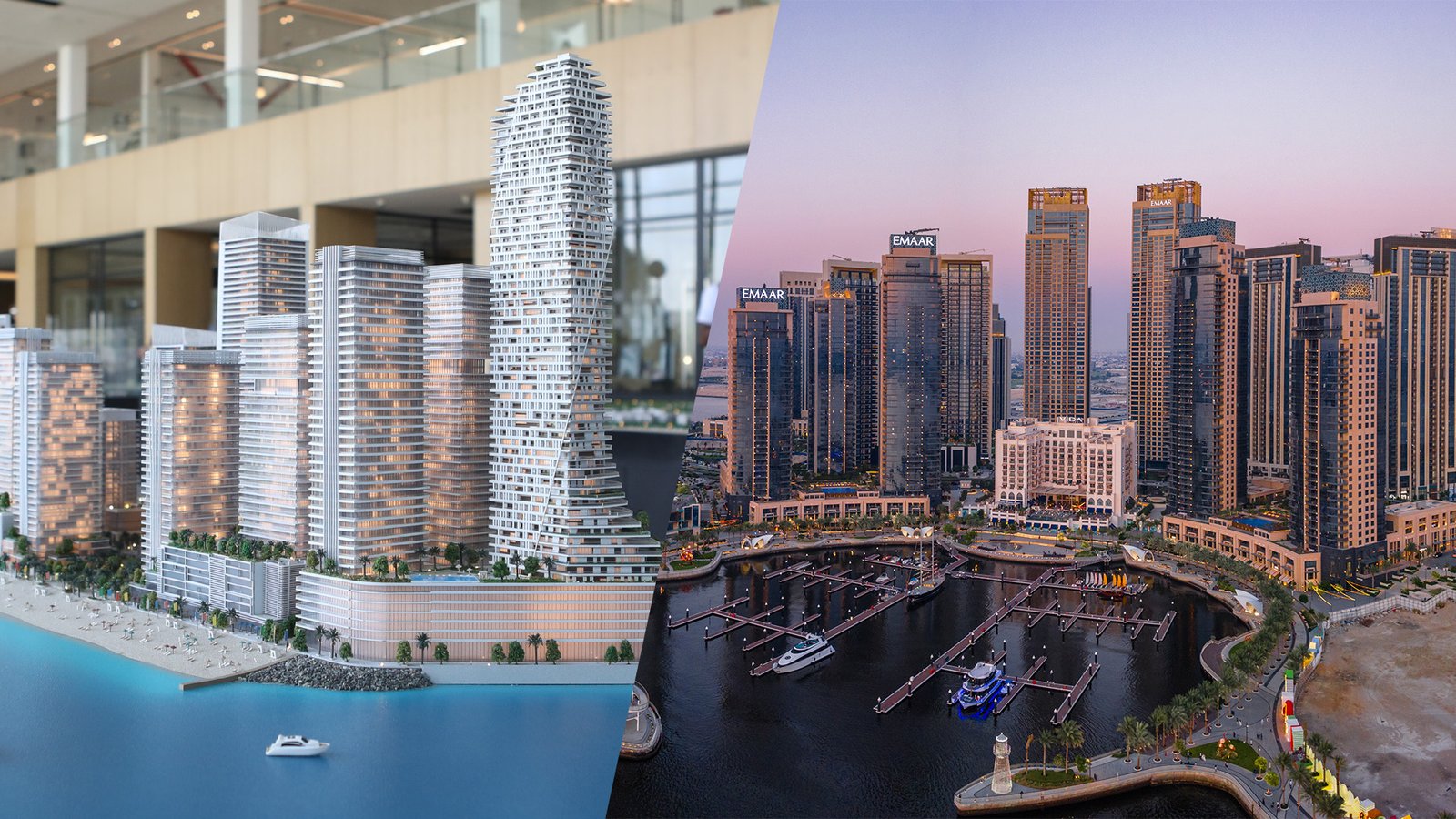
The Dubai real estate market continues to draw international attention in 2025, with investors closely watching the performance of off-plan properties and ready properties. Both options have distinct advantages, financial implications, and risks. Understanding their differences is essential to determine which strategy aligns best with your investment goals, whether that’s long-term capital growth or immediate rental income.
Dubai’s 2025 market: Strong returns, smarter choices
Dubai’s property market in 2025 remains one of the most active globally, driven by investor demand, high rental yields, and flexible purchase options. Rental yields are averaging between 6% to 7%, with some apartment communities exceeding 7%. Off-plan projects continue to dominate new transactions, accounting for around 70% of all residential deals this year. However, analysts have also noted early signs of market moderation due to new project launches and supply expansion.
Despite these trends, off-plan properties remain attractive because of their competitive pricing and flexible payment structures. Meanwhile, ready properties continue to appeal to investors who prioritize stability and immediate returns.
Off-Plan Properties
Off-plan properties refer to developments sold while under construction or before completion. They’re a popular choice for investors aiming to enter the market early and capture appreciation potential before hand-over.
One of the primary reasons investors choose off-plan projects is the lower entry price. Developers often offer early-bird discounts to attract buyers at the project’s launch stage. Flexible payment plans are another major draw, allowing investors to spread payments over construction milestones or even post-handover, improving cash-flow management.
From a returns perspective, the capital appreciation potential is a major attraction. As a project nears completion, the property’s market value often increases, providing opportunities for investors to resell at a profit or secure long-term appreciation once handed over. In 2025, several projects in Dubai South, Business Bay, and JVC have already shown appreciation rates of 15–25% from launch to near completion.
However, off-plan investments come with inherent risks. Construction delays, changes in specifications, or developer financial issues can affect timelines and returns. Additionally, since the asset isn’t complete, investors face delayed rental income and higher exposure to market fluctuations during the construction period. Liquidity can also be a challenge, as selling off-plan units mid-construction may require approvals or involve price negotiations below market value.
Off-plan investments typically work best for investors with a medium-to-long-term horizon who can tolerate delayed returns and prioritize capital growth over immediate income. Choosing a reputable developer, ensuring strong project location, and reviewing payment milestones are critical before investing.
Ready Properties
Ready properties, also known as completed or secondary market properties, appeal to investors seeking faster returns and lower risk. These units are already completed, allowing investors to start generating rental income immediately.
Because they are tangible assets, ready properties eliminate uncertainty related to construction or delivery. Investors can physically inspect the property, verify amenities, assess demand, and understand maintenance costs upfront. These factors make ready units particularly attractive to those who value transparency and predictable cash flow.
While ready properties generally require a higher upfront investment compared to off-plan units, they often deliver consistent yields. Dubai’s residential market has seen yields averaging 6–8% for completed apartments, especially in popular areas like Jumeirah Village Circle, Dubai Marina, and Dubai Silicon Oasis.
However, ready properties tend to have lower appreciation potential than off-plan developments, since much of the growth is already reflected in the price. Maintenance and service charges begin immediately, and investors must account for potential refurbishment costs if the unit is not new.
Ready properties are well-suited for investors prioritizing immediate income and reduced uncertainty, or for those entering the market for shorter-term returns.
Comparative Analysis: Off-Plan vs Ready
When assessing off-plan vs ready properties in Dubai’s 2025 market, investors should consider several key performance indicators:
Initial Investment: Off-plan properties usually require smaller deposits and offer flexible payment plans, while ready properties often demand larger upfront payments or mortgage commitments.
Rental Income: Ready units generate rental returns immediately after purchase, while off-plan investments start producing income only after completion and hand-over.
Capital Growth: Off-plan investments offer greater potential for appreciation, especially during the construction period. In contrast, ready units typically show moderate but steady growth aligned with market conditions.
Risk Profile: Off-plan properties carry higher risks due to potential delays or market changes, while ready units provide a more secure investment with immediate usability.
Liquidity: Ready properties can be sold or rented quickly, offering better short-term flexibility. Off-plan units, especially during early construction, are less liquid.
Investor Objective: Off-plan suits growth-oriented investors willing to wait for returns, whereas ready properties appeal to those focused on cash flow and shorter holding periods.
Key Considerations for 2025 Investors
In 2025, both property types remain viable depending on your strategy and tolerance for risk. Investors should evaluate:
Location and Infrastructure Development: Properties in emerging communities like Dubai Creek Harbour, Dubai South, and JVC may offer stronger future growth potential.
Developer Reputation: For off-plan, this is non-negotiable. A proven track record in delivery timelines and quality reduces construction risk.
Payment Flexibility: Off-plan properties provide staged payment options that can ease financial pressure. Ready units, however, often require full or mortgage-based payments upfront.
Rental Yield Analysis: Ready apartments continue to deliver 6–8% average yields, outperforming many global cities. Off-plan units may surpass these figures post-handover if acquired at early launch prices.
Capital Appreciation Forecasts: Off-plan projects in prime or upcoming areas have demonstrated appreciation rates between 15–25% before hand-over, creating significant upside potential.
Market Oversupply and Timing: Analysts project moderate price stabilization through late 2025 as more projects are delivered. Strategic timing will be essential for entry and exit decisions.
Holding Costs: Ready properties require immediate payment of service charges, maintenance, and potential furnishing expenses, which investors must account for when calculating total yield.
Exit Strategy: Determine whether your goal is to hold long-term, rent, or resell post-handover. This helps guide whether off-plan or ready aligns with your broader portfolio.
Visa and Ownership Incentives: Properties valued above AED 2 million may qualify buyers for Dubai’s 10-year Golden Visa, adding an additional layer of value for both categories.
Which Offers Better Returns in 2025?
There is no single answer to whether off-plan or ready properties offer better returns in Dubai for 2025, it depends on the investor’s objectives.
For those seeking capital appreciation and long-term value, off-plan projects remain a strong choice, especially when purchased early in prime developments with established demand. With lower entry prices and payment flexibility, they can yield high percentage gains by the time of completion.
On the other hand, if the goal is immediate rental income and lower exposure to market risk, ready properties continue to offer competitive yields and stable performance. Areas such as JVC and Dubai Marina have demonstrated returns above 7%, appealing to income-focused investors who prioritize cash flow over speculation.
Some investors even pursue a hybrid strategy, combining both categories, holding ready units for rental income while securing off-plan units for long-term growth. This approach helps balance short-term yield and long-term appreciation within one portfolio.
Ultimately, the better return in 2025 depends on your investment horizon, risk appetite, and financial strategy. Dubai’s evolving infrastructure, government incentives, and investor-friendly ecosystem ensure that both off-plan and ready properties will continue to play vital roles in shaping the city’s real estate investment landscape this year.
