

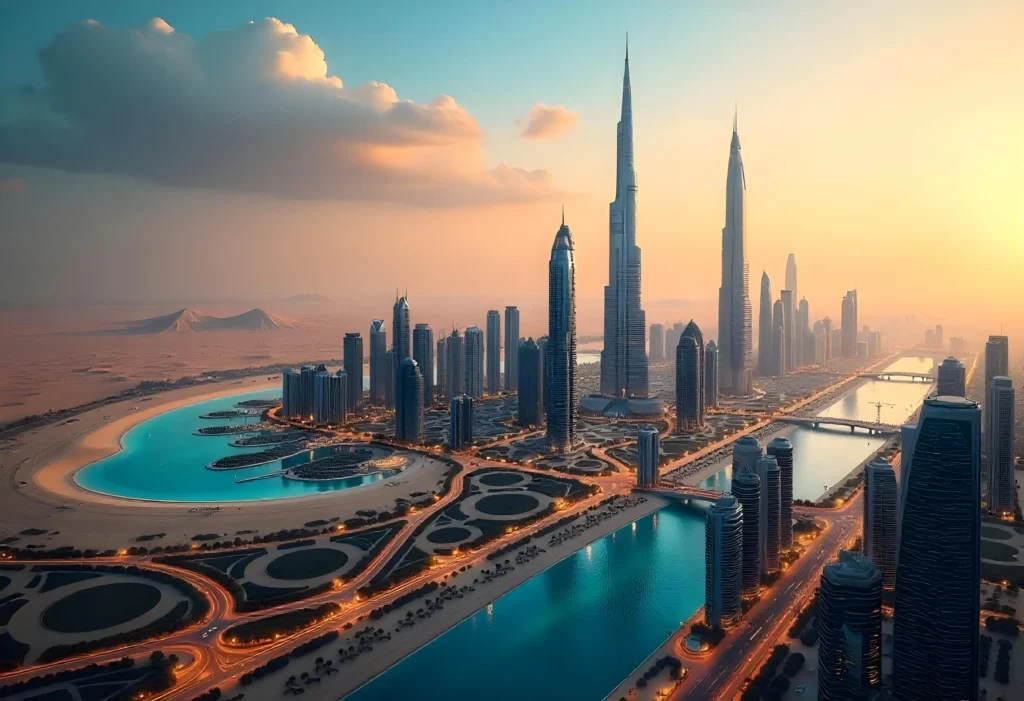
The interesting journey of Dubai’s skyline evolution depicts the city’s quick growth and development into an important contributor in the world economy. Dubai has transformed from its modest beginnings as a small village into a thriving city with stunning architectural wonders. The skyline has become a symbol of the city’s spirit and aspirations as a result of this metamorphosis, which stands for ambition, innovation and growth.
In this blog, we will delve deeper into the evolution of Dubai’s skyline, exploring iconic buildings in Dubai that have defined its identity. We will also look at major projects that are currently underway and foresee future advancements that might improve this amazing city even more. Dubai’s skyline will surely continue to be an alluring scene that captures its history and future goals as it develops and innovates.
Evolution of the Dubai Skyline
The story of Dubai’s development from a tiny fishing town to a vibrant city with a famous skyline is an example of ambition and innovative planning. Early in the 20th century, Dubai was a small community that relied heavily on fishing and pearl diving and had conventional low-rise buildings. But revolutionary upheaval was spurred by the finding of oil in the late 1960s.The revenue generated from oil enabled the government to invest heavily in infrastructure, leading to a construction boom that would forever alter the city’s landscape.
The Dubai skyline evolution gained momentum in the 1990s with the development of iconic structures and commercial complexes. International developers and investors seeking to profit from Dubai’s expansion were drawn to the country after freehold property regulations were introduced in the early 2000s. This change propelled the skyline into a world of remarkable architectural accomplishments, resulting in a distinctive fusion of futuristic structures and historical sites.
The Dubai skyline was distinguished by its unique architecture by the end of the first decade of the 21st century, with a variety of hotels, residential skyscrapers, and commercial buildings that were designed by some of the top architects in the world. The city’s significance as an essential international commercial and tourism hub is reflected in the skyline’s continual transformation. With a commitment to sustainable development and innovation, the future of Dubai’s skyline is not only bright but also fueled by an array of future real estate projects in Dubai that promise to reshape its landscape even further.
Iconic Skyline Landmarks In Dubai
Among the many architectural developments that define the Dubai skyline evolution, certain iconic buildings in Dubai have become symbols of the city and its rapid growth. Here is a brief list of some of the major ones:
- The Burj Khalifa: The Burj Khalifa, at 828 meters, is the world’s tallest structure in addition to being the highest in Dubai. This iconic wonder, which was finished in 2010, has come to represent Dubai’s ambition and success on a global scale. The Burj Khalifa, which was designed by Adrian Smith of Skidmore, Owings & Merrill, is home to lavish residences, offices, and the renowned Atmosphere restaurant. Its observation decks, which provide expansive scenery of the city and beyond, draw millions of tourists each year, solidifying its place as a must-see landmark in the changing Dubai cityscape.
- Burj Al Arab: The Burj Al Arab is often regarded as the world’s only seven-star hotel and is one of the most famous iconic buildings in Dubai. This magnificent sail-shaped building is situated on a man-made island and is connected to the mainland by a private bridge. The Burj Al Arab, which opened in 1999, is the pinnacle of exclusivity and luxury, providing opulent lodging and unmatched service. Its unique silhouette, which symbolizes the city’s dedication to luxury and architectural brilliance, has grown to be a recognizable aspect of the Dubai skyline.
- The Marina: One of the city’s liveliest neighborhoods, the Dubai Marina features a spectacular array of residential complexes and skyscrapers. This manmade marina, which was completed in the middle of the 2000s, has a waterfront promenade with restaurants, shops, and recreational areas. Famous structures include the lavish Marina 101 and the winding Cayan Tower. Luxurious living, breathtaking vistas, and an active social environment together make Dubai Marina a highly desired area and a major contribution to the overall evolution of the Dubai skyline.
- Palm Jumeirah: Dubai’s renowned Palm Jumeirah is an iconic representation of the city’s aspirations and a groundbreaking engineering success. Luxurious villas, five-star resorts, and upscale waterfront homes can be found on this man-made island in the shape of a palm. It displays the evolution of the Dubai skyline and turns natural areas into exceptional real estate prospects.
- The Frame of Dubai: The Dubai Frame, a unique architectural landmark that opened in 2018, provides an insight into Dubai’s past and future. This golden structure, which is 150 meters tall, offers tourists breathtaking views of both the contemporary skyline and the ancient Dubai. It is a well-liked destination for both visitors and residents since the design represents the link between the old and the new.As part of the ongoing Dubai skyline evolution, the Frame stands as a testament to the city’s innovative spirit and forward-thinking vision.
- Museum of the Future: The Museum of the Future is one of the latest architectural marvels in Dubai. Its futuristic torus-shaped design, adorned with Arabic calligraphy, represents the city’s vision for innovation and technology. This building stands as a masterpiece of parametric design and 3D construction techniques, marrying form with function in a way that accentuates the iconic buildings in Dubai.
Upcoming Mega Projects in 2026 That Are Ready To Refine Dubai’s Skyline
With a number of prominent landmarks nearing completion, Dubai’s skyline is set for yet another dramatic transformation in 2026. Through ultra-luxury developments, creative design, and sustainable urban planning, the city keeps pushing the boundaries of architecture. Here are the most interesting upcoming iconic skyline landmarks in Dubai in 2026:
- Palm Jebel Ali: Palm Jebel Ali, a vast artificial island more than twice the size of Palm Jumeirah, is an intriguing contribution to the evolution of the Dubai skyline.Roads and utilities are among the major infrastructure projects that are expected to be finished by late 2026, even though the whole construction is scheduled to take several years. Around the same time, the first phase of villas is anticipated to be turned over.The masterplan includes hotels and a distinctive architectural centerpiece, such as a giant lunar sphere, making it one of the most anticipated future real estate projects in Dubai.
- Dubai Creek Harbour: Dubai Creek Harbour is developing into a “Second Downtown,” with Emaar’s residential towers scheduled for handover in 2026.With the famous Dubai Creek Tower as its focal point, this region will contribute to the development of the Dubai skyline.The district’s growth will enhance the collection of iconic buildings in Dubai, driving investment and tourism.
- Sobha Hartland II: Sobha Hartland II is a lagoon-style villa neighborhood that emphasizes finest building and green spaces. Major phases, such as the villas at Sobha Estates, are anticipated by Q4 2026. This development will play a significant role in future real estate projects in Dubai, enhancing the residential landscape of the city and supporting the expansion of the Dubai skyline.
- Burj Binghatti Jacob & Co Residences: The Burj Binghatti Jacob & Co Residences in Business Bay, a partnership with luxury brand Jacob & Co, is set to become the tallest residential tower in the world. With more than 100 floors and diamond-shaped spires, this “hypertower” will redefine the evolution of the Dubai skyline when it reaches its completion in June 2026.
- Al Habtoor Tower: Al Habtoor Tower is an 82-floor luxury residential skyscraper along the Dubai Water Canal. Expected for delivery in 2026, it will offer high-end living with stunning views and convenient access to key city infrastructure.
- Baccarat Hotel & Residences: The Baccarat Hotel & Residences in Downtown Dubai, designed by Studio Libeskind, is set for delivery in 2026. This ultra-luxury project will elevate elegance and sophistication in the city’s central district.
Future Developments Shaping Dubai’s Skyline
The future real estate projects in Dubai are set to significantly shape the city’s skyline and enhance its status as a global hub for business and tourism:
- Sustainable Advancements: With an emphasis on sustainability, Dubai hopes to incorporate environmentally friendly methods into next projects, highlighting green areas and renewable energy sources that support a high standard of living for locals.
- Initiatives for Smart Cities: The government has committed itself to making Dubai a smart city by integrating technology into security, transportation, and infrastructure systems to boost productivity and draw in innovative concepts.
- Mixed-Use Developments: The rising demand for mixed-use developments combines residential, commercial, and leisure spaces, catering to residents seeking a balanced lifestyle that merges work and leisure.
- Urban Revitalization: Urban regeneration projects in older neighborhoods, such as Dubai Creek and Deira, seek to improve these regions as the city grows, protecting cultural heritage while creating new avenues for tourists and investment. These initiatives are essential to the evolution of the Dubai skyline and guarantee a thriving and sustainable future.
Through its renowned structures, Dubai’s skyline evolution reflects its economic prosperity and dedication to innovation, showcasing the city’s ambition, inventiveness, and resilience. Dubai reinforces its position as a global metropolis of the future as the skyline changes with exciting megaprojects and upcoming developments. This exciting trip combines luxury, sustainability, and modern technology, providing residents, investors, and visitors with countless opportunities and serving as a reminder of the amazing advancements that are still to come.
