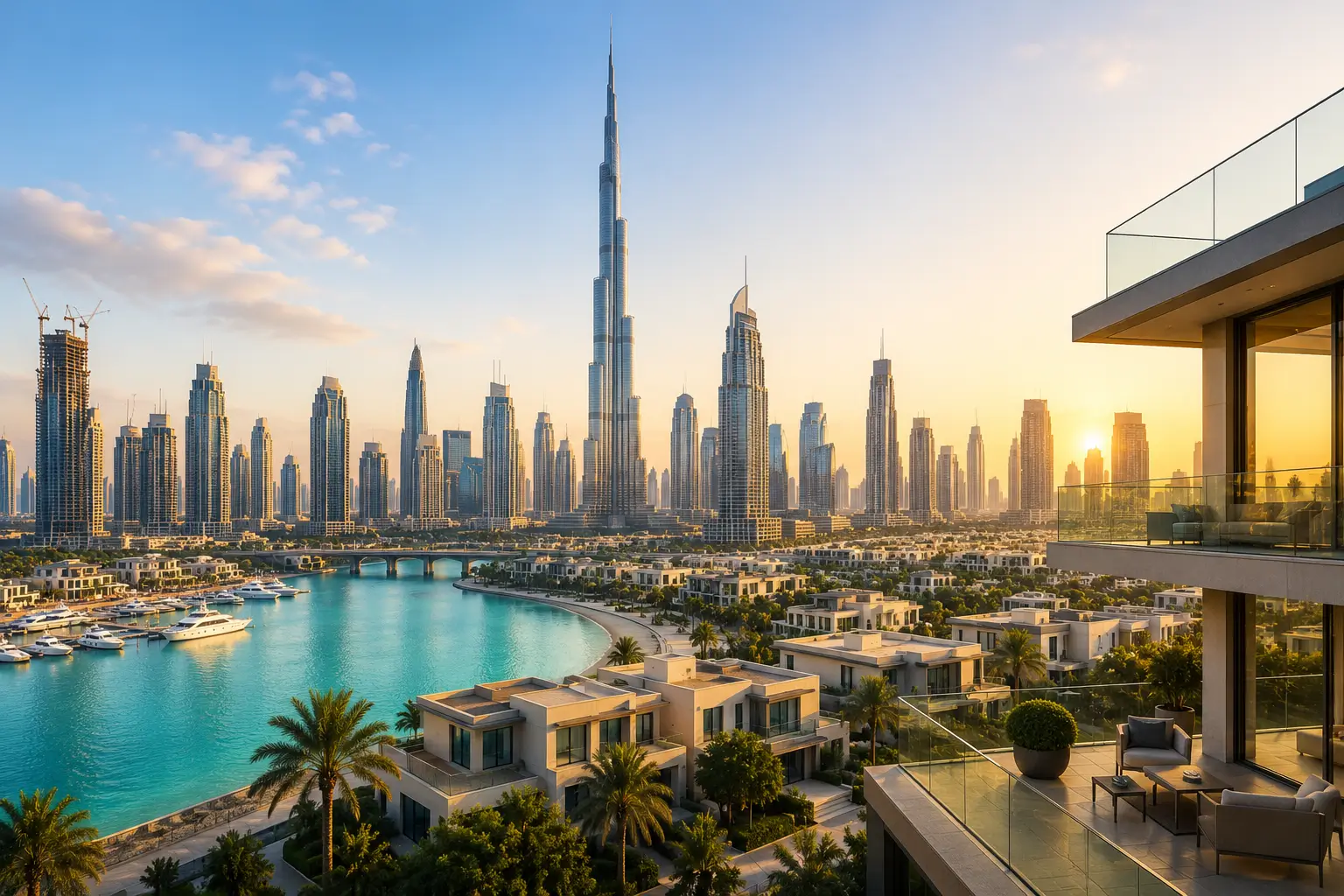
Dubai continues to evolve as one of the world’s most closely watched property destinations. Strong transaction activity, international demand, major infrastructure projects and the expansion of new lifestyle districts are creating fresh opportunities for buyers and investors.
But looking at headlines alone does not tell the complete story.
The Dubai real estate market 2026 is becoming increasingly diverse, with established communities competing alongside emerging waterfront districts, branded residences and large-scale master developments. For buyers, this means more choice. For investors, it means that selecting the right property requires more research than simply choosing a popular location.
So, what should buyers be watching this year?
From Dubai property prices 2026 and infrastructure expansion to the growing demand for off-plan property in Dubai, several trends are shaping the market and influencing where future demand could emerge.
Dubai Property Market Shows Continued Strength
The first half of 2026 has reinforced Dubai’s position as one of the region’s most active real estate markets. More than 86,000 property transactions worth AED 286.43 billion were recorded during the first six months of the year. The scale of this activity reflects continued demand across residential, commercial and land transactions.However, transaction volume should not be interpreted as a guarantee that every property will perform equally.
The Dubai property market contains hundreds of communities and thousands of individual developments, each with different supply levels, rental demand, developer profiles and price points.
For buyers, the important question is not simply whether Dubai is performing well. It is whether the particular property being considered has the fundamentals to remain attractive after purchase.
That means looking beyond headline market growth and examining:
- Location and accessibility
- Developer track record
- Current and future supply
- Rental demand
- Service charges
- Payment plans
- Property specifications
- Resale potential
This approach becomes especially important when assessing Dubai property prices 2026, because the average price of a city-wide market does not necessarily reflect the value of a specific community or building.
Why Dubai Remains Attractive to International Buyers
Dubai’s property market has developed into a genuinely international investment destination.
The UAE continues to attract buyers from Europe, Asia, the Middle East and other global markets because of its connectivity, business environment, tourism sector, lifestyle offering and long-term development plans. This international buyer base provides an important layer of resilience.
A property market supported by multiple nationalities and buyer profiles can have a broader demand base than one dependent on a single group of investors. For international buyers considering Dubai real estate investment, this global appeal can be particularly significant. Many investors are not simply purchasing an apartment. They are looking at Dubai as part of a wider wealth, lifestyle or relocation strategy. Some may want rental income. Others may be planning a future move to the UAE. Some may be looking for capital appreciation over a longer holding period. The right property can therefore look very different depending on the investor’s objective.
Understanding Dubai Property Prices in 2026
One of the biggest mistakes buyers can make is assuming that rising market activity means every property is becoming equally valuable.
The reality is more nuanced.
Dubai property prices 2026 vary significantly depending on community, developer, property type, building quality, views, floor level, amenities, connectivity and surrounding supply. A waterfront apartment, for example, may command a very different price per square foot from an apartment in an inland community, even when both have similar specifications.Similarly, a property in an established neighbourhood may have stronger current rental demand, while a new development in an emerging district may offer greater long-term growth potential.
This is why buyers should compare properties on a like-for-like basis rather than relying on city-wide averages.When evaluating the Dubai property market, investors should ask:
What am I paying today, and what fundamentals support this price?
That question is often more useful than simply asking whether prices are going up.
Infrastructure Could Shape the Next Property Hotspots
Real estate and infrastructure have always been closely connected in Dubai.
Major road, rail and Metro projects can change how communities function by improving access to employment centres, commercial districts, schools, leisure destinations and other residential areas.
The proposed First Al Khail Street development is one of the major projects attracting attention. The AED 18 billion infrastructure programme includes an elevated road running parallel to Sheikh Zayed Road, with the proposed route extending around 15 kilometres and serving areas including Al Barsha, Al Quoz, Business Bay and Meydan. The project is expected to significantly reduce journey times during peak periods once completed. For residents, better connectivity can mean shorter daily commutes. For investors, improved accessibility can potentially strengthen the appeal of communities connected to major employment and lifestyle destinations. This is one reason infrastructure should form part of any serious Dubai real estate investment analysis.
However, investors should be careful when assigning value to projects that have not yet been completed. An announced infrastructure project can influence future expectations, but it should not replace the fundamentals that exist today.
Metro and Rail Expansion Create New Possibilities
Dubai is also expanding its wider transport network.The Dubai Metro Blue Line is scheduled for completion in 2029, while proposed future Metro expansion could bring additional districts into the city’s public transport network. Etihad Rail is also developing passenger connectivity between the emirates, creating another layer of mobility for residents and visitors.
Transportation matters because accessibility can influence both lifestyle convenience and property demand. A community with easier access to workplaces, retail destinations and entertainment areas can become more attractive to tenants and homeowners. For investors researching the best areas to invest in Dubai, transport connectivity should therefore be considered alongside current rental demand and property pricing. But there is an important distinction between an area with a functioning transport network and one that is expected to receive improved connectivity several years from now. Investors should understand that difference before paying a premium based on future expectations.
The Rise of Waterfront Communities
Dubai’s coastline continues to play an important role in the city’s property story.
Emerging districts such as Dubai Maritime City are attracting attention as new residential, commercial, hospitality and retail projects enter the market. The location offers a combination that is relatively difficult to replicate: waterfront living while remaining close to established parts of central Dubai. As infrastructure develops and more projects are delivered, such districts could become increasingly important within Dubai’s wider residential landscape. For buyers considering the best areas to invest in Dubai, emerging waterfront locations can be worth studying.
However, being an emerging waterfront community does not automatically make a project a good investment.
Buyers should compare:
- Price per square foot
- Developer reputation
- Construction progress
- Waterfront positioning
- Unit orientation
- Payment structure
- Service charges
- Handover timeline
- Future competing supply
The strongest opportunities are often found where the property’s price is appropriate for the current stage of the community rather than where buyers are paying a large premium purely for future expectations.
Is Off-Plan Property Still Relevant?
Off-plan developments remain a major part of Dubai’s residential market. The appeal is understandable.
Off-plan property in Dubai can provide buyers with structured payment plans, access to newly launched developments and the opportunity to purchase before a project is completed. For some investors, this can create flexibility that is less common with completed properties. But off-plan investment also requires careful evaluation.
Before purchasing off-plan property in Dubai, buyers should investigate the developer’s delivery history, escrow arrangements, construction progress, payment schedule, expected handover and competing projects entering the same area.The price should also be compared with completed properties nearby.An off-plan unit may look attractive because of a flexible payment plan, but the overall investment case still needs to make financial sense.
Branded Residences Add a New Dimension to Luxury Real Estate
Dubai’s premium property segment is becoming increasingly sophisticated.Branded residences are an important part of that evolution, combining residential ownership with hospitality, lifestyle or globally recognised brands.Developments associated with established names can appeal strongly to international buyers because they provide familiarity and a clearly defined service proposition.Baccarat Hotel and Residences Dubai is one example of the growing branded residential segment.
However, the presence of a famous brand should not be treated as an investment guarantee.Buyers should still examine purchase prices, annual service charges, management arrangements, expected rental income, comparable developments and future competition.For luxury buyers, lifestyle value may be an important part of the purchase. For investors, the financial numbers still need to work.
What Makes a Good Dubai Property Investment?
The strongest Dubai property investment decisions are usually based on several factors rather than one market trend.
1. Entry Price: Buying at a sensible price matters regardless of how strong the overall market appears.
2. Location:A good location should have either established demand or credible long-term fundamentals supporting future demand.
3. Developer: Developer reputation can influence construction quality, delivery timelines, community management and resale perception.
4. Rental Demand: Investors should look at actual tenant demand rather than relying solely on advertised rental yields.
5. Future Supply: A community with a large number of competing units entering the market may face different rental and resale dynamics.
6. Exit Strategy: Before buying, investors should consider who the eventual buyer or tenant is likely to be.
This framework can help turn a general interest in Dubai real estate investment into a more structured decision.
Which Areas Deserve Attention?
There is no universal answer to the question of the best areas to invest in Dubai.The right community depends on the buyer.
- Investors focused on rental income may prioritise established areas with proven tenant demand and strong connectivity.
- Those seeking long-term capital appreciation may look more closely at emerging master developments where infrastructure and community amenities are still expanding.
- Luxury buyers may prioritise waterfront locations, branded residences or low-density developments where exclusivity and lifestyle appeal are important.
- First-time buyers may prefer established communities where comparable sales, rental data and completed buildings provide more information for decision-making.
The important thing is to match the area with the investment objective.
Dubai Property Investment vs. Buying for Lifestyle
Not every property purchase needs to be approached purely through an investment lens. Dubai attracts buyers who want to live in the city as much as those looking for financial returns.For an end-user, factors such as schools, commute times, amenities, community atmosphere and proximity to work may matter more than rental yield. For an investor, tenant demand, operating costs, capital growth potential and resale liquidity may take priority.
Understanding this difference can help buyers avoid choosing a property based on someone else’s investment strategy. A property can be excellent for personal use without being the strongest rental investment — and vice versa.
What Buyers Should Watch During the Rest of 2026
Several trends are likely to remain important throughout the year.
- International demand is expected to remain a major component of the market as Dubai continues to attract global buyers.
- Infrastructure development could gradually change the relative attractiveness of different communities.
- Waterfront developments are likely to remain prominent as new districts mature.
- Branded residences will continue to expand the premium segment.
- Off-plan property in Dubai is likely to remain an important choice for buyers seeking new developments and structured payment options.
At the same time, buyers should remain selective.A growing market can provide opportunities, but it also creates more competition between developments.The strongest investment is not necessarily the newest launch or the most heavily marketed project.
Looking Beyond the Headlines
The Dubai real estate market 2026 story is bigger than transaction volumes.Dubai is simultaneously investing in infrastructure, expanding its residential footprint, attracting international businesses, developing tourism destinations and creating new lifestyle communities.That combination is what makes the market particularly interesting.
But opportunity and certainty are not the same thing.Investors still need to evaluate individual properties based on price, demand, location, developer quality, supply and their own financial objectives.
The same approach applies when analysing Dubai property prices 2026. A rising market does not mean buyers should stop negotiating, comparing or researching.
Make Your Dubai Property Decision With RGP Properties
Whether you are purchasing your first apartment, looking for a rental property or exploring a luxury residence, choosing the right development requires more than browsing property listings.
At RGP Properties, we help buyers understand the Dubai market, compare communities and evaluate properties according to their individual objectives.Our approach to Dubai real estate investment focuses on helping clients understand the complete opportunity — from location and pricing to payment plans, developer reputation and long-term potential.
If you are exploring Dubai property investment in 2026, our team can help you narrow down suitable options based on your budget and investment goals.From established communities to emerging destinations and off-plan property in Dubai, the right opportunity depends on finding the right balance between today’s fundamentals and tomorrow’s potential.
Looking to invest in Dubai? Speak with RGP Properties and explore the opportunities that fit your goals.
