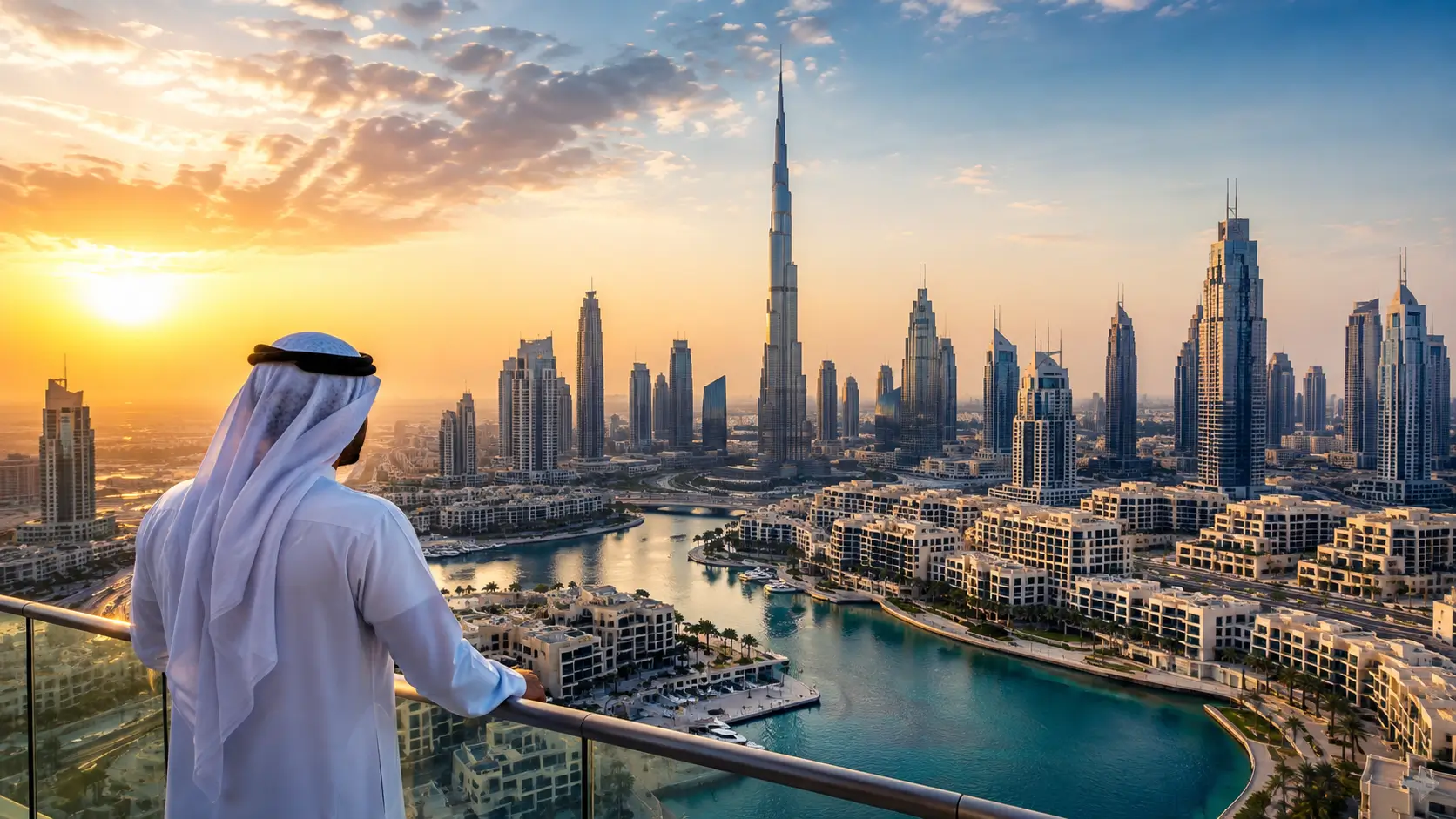
Five years ago, Dubai’s property market was primarily driven by three buyer types: wealthy investors seeking yield, expatriates in oil-linked industries, and speculative flippers chasing appreciation. The market worked. But it was narrower than it looked.
In 2026, something fundamentally different is happening. UAE economic diversification property demand is generating entirely new categories of buyer, professionals and entrepreneurs from sectors that barely existed as significant Dubai employers at the start of this decade. Understanding who these buyers are, what they need, and where they are looking is one of the most important market intelligence questions any serious property advisor should be asking right now.
Here is our analysis of what UAE diversification real estate 2026 is actually producing on the ground.
The Economic Shift Behind the Buyer Shift
The numbers behind this transformation are striking. Non-oil activities accounted for approximately 77% of UAE GDP in 2025, driven by trade, logistics, finance, tourism, construction, and professional services.
Non-oil sectors now play a significant role in UAE GDP growth and economic diversification, with industries such as technology, logistics, financial services, and renewable energy driving expansion. This shift has reduced reliance on oil and created a broader, more resilient economic base.
This is not a marginal shift. It is a structural transformation of the UAE’s employment base, and it is creating Dubai new property buyer profiles 2026 that the market simply did not need to accommodate five years ago.
The New Buyer Profiles UAE Economic Diversification Property Demand Is Generating
- The Tech Professional: Dubai’s technology sector has grown dramatically as the UAE positions itself as a global digital hub. DIFC alone has attracted hundreds of fintech firms, AI companies, and digital infrastructure businesses in the past three years.
Dubai tech sector property demand from this group looks distinctly different from traditional expat housing requirements. These are younger, globally mobile professionals with strong purchasing power, strong preference for smart home technology, proximity to co-working infrastructure, and communities with an active, connected social environment. They are buying and renting in Business Bay, Downtown Dubai, and emerging areas near DIFC, and they are entering the market earlier in their careers than previous professional cohorts.
- The Logistics Entrepreneur: Commercial real estate fundamentals across office and industrial markets have continued to show resilience, underpinned by supply constraints and sustained occupier demand.
UAE logistics real estate growth has created a significant new buyer category: entrepreneurs and senior executives in the UAE’s rapidly expanding trade, e-commerce, and supply chain sectors. These buyers often need properties close to Al Maktoum International Airport, Jebel Ali Port, and Dubai South — communities that were secondary considerations for most buyers five years ago but are now primary choices for an entire professional category.
- The Finance and Wealth Management Professional: Dubai’s emergence as a genuine global financial hub, attracting family offices, private equity firms, hedge funds, and wealth management operations from Europe, Asia, and the GCC has created Dubai finance sector property buyers with very specific requirements
These are high-net-worth individuals seeking privacy, quality, and address prestige. They gravitate toward Emirates Hills, DIFC-adjacent apartments, Palm Jumeirah, and Jumeirah Bay Island. Critically, they are long-term residents rather than rotating expats, which means their property decisions carry a permanence that previous finance-sector buyers rarely brought to the market.
- The Healthcare and Education Professional: UAE’s ambitious expansion of healthcare infrastructure and international school capacity has created a growing cohort of medical professionals, researchers, and senior education administrators. This group prioritises family-friendly communities with school access and quality healthcare proximity — Dubai Hills Estate, Arabian Ranches, and Jumeirah, and they are making five to ten-year horizon purchase decisions rather than short-term rental arrangements.
What Non Oil Economy Dubai Real Estate Means for Property Values
The UAE real estate sector has maintained its strong performance throughout 2026, driven by robust demand, the success of the country’s long-term development vision, continued economic diversification, the growing number of high-net-worth individuals, progressive residency and investment policies, and ongoing infrastructure expansion.
The practical implication of UAE economic diversification property demand for investors is straightforward: demand is becoming broader, more stable, and less cyclically vulnerable than at any previous point in the market’s history.
When a property market depends on a single industry or buyer type, it inherits that sector’s volatility. When it serves professionals across technology, logistics, finance, healthcare, renewable energy, and professional services simultaneously, it develops a structural resilience that no single economic event can easily disrupt.
Dubai new property buyer profiles 2026 also tend to be longer-term residents than previous expatriate cohorts. The Golden Visa programme, which links ten-year residency to property ownership above AED 2 million, is actively incentivising these new professional buyers to commit permanently rather than rotate every two or three years. That permanence is one of the most significant structural changes in Dubai’s property market and it is directly a product of economic diversification creating careers worth building a life around in the UAE.
Where These New Buyers Are Looking
UAE diversification real estate 2026 demand is not evenly distributed across communities. Different professional groups are gravitating toward specific areas based on their employment hubs, lifestyle preferences, and family requirements.
Tech and fintech professionals are concentrating around Business Bay, Downtown, and DIFC. Logistics sector buyers are focusing on Dubai South, Al Furjan, and communities within range of Jebel Ali. Finance professionals are driving ultra-prime demand on Palm Jumeirah, in Emirates Hills, and at DIFC-adjacent developments. Healthcare and education professionals are consistently choosing Dubai Hills Estate, Arabian Ranches, and community-led developments with school access.
For investors identifying which communities to target, understanding which non-oil economy Dubai real estate professional profile your property appeals to is now as important as understanding the physical characteristics of the asset itself.
What Can Be Concluded From The Data
UAE economic diversification property demand is one of the most important and underappreciated structural stories in Dubai real estate right now. The buyer profiles being created by technology, logistics, finance, healthcare, and renewable energy sector growth are not incremental additions to the existing market. They are genuinely new categories — with different community preferences, different holding horizons, and different requirements from the properties they choose.
For investors who understand these new profiles and position their purchases accordingly, the non oil economy Dubai real estate story is not just background context. It is a direct investment signal.
At RGP Properties, we track these buyer profile shifts in real time and help clients identify which communities and property types are best positioned to serve the next wave of Dubai new property buyer profiles 2026.
Contact RGP Properties today and let us help you understand where UAE diversification real estate 2026 demand is heading next.
